


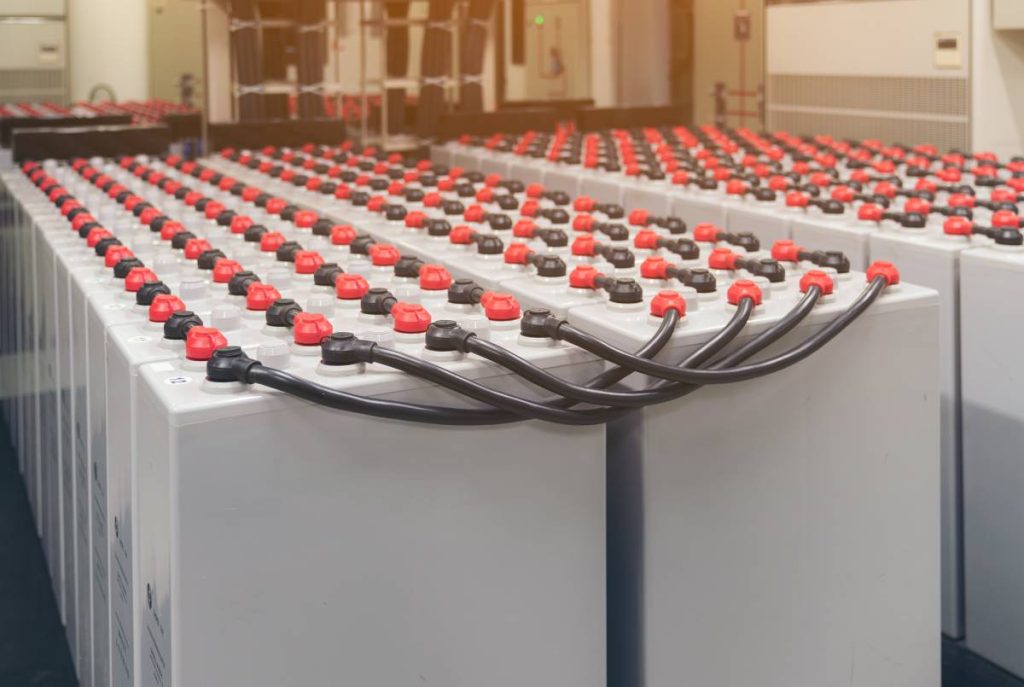
Your solar panels work brilliantly between 9am and 3pm. But the sun doesn’t pay your electricity bill at 7pm when your family is home, cooking dinner, running the dishwasher, and watching TV.
That’s the fundamental problem with solar power that nobody talks about upfront. Solar panels generate energy. They don’t store it. Without a storage solution, any power your panels produce but don’t immediately use goes straight back to the grid, often at a rate far lower than what you’ll pay to buy it back later.
The result? You’re still dependent on your utility company. You’re still vulnerable to outages. And you’re leaving real money on the table every single day.
Solar batteries change that equation entirely. They capture the energy your panels produce, store it, and make it available exactly when you need it, day or night, grid or no grid. This guide explains everything you need to know, in plain English, before you make any decisions.
Table of Contents
- What Is a Solar Battery?
- How Do Solar Batteries Work?
- Types of Solar Batteries
- Key Specs You Need to Understand
- Do You Actually Need a Solar Battery?
- How Much Do Solar Batteries Cost?
- Solar Battery Lifespan & Maintenance
- Final Thoughts
TL;DR: What Is a Solar Battery?
A solar battery is a rechargeable energy storage device that captures excess electricity generated by solar panels and stores it for later use. Instead of sending surplus energy back to the grid, a solar battery holds it so homeowners can use clean, solar-powered electricity at night, during peak-rate hours, or when the grid goes down.

How Do Solar Batteries Work?
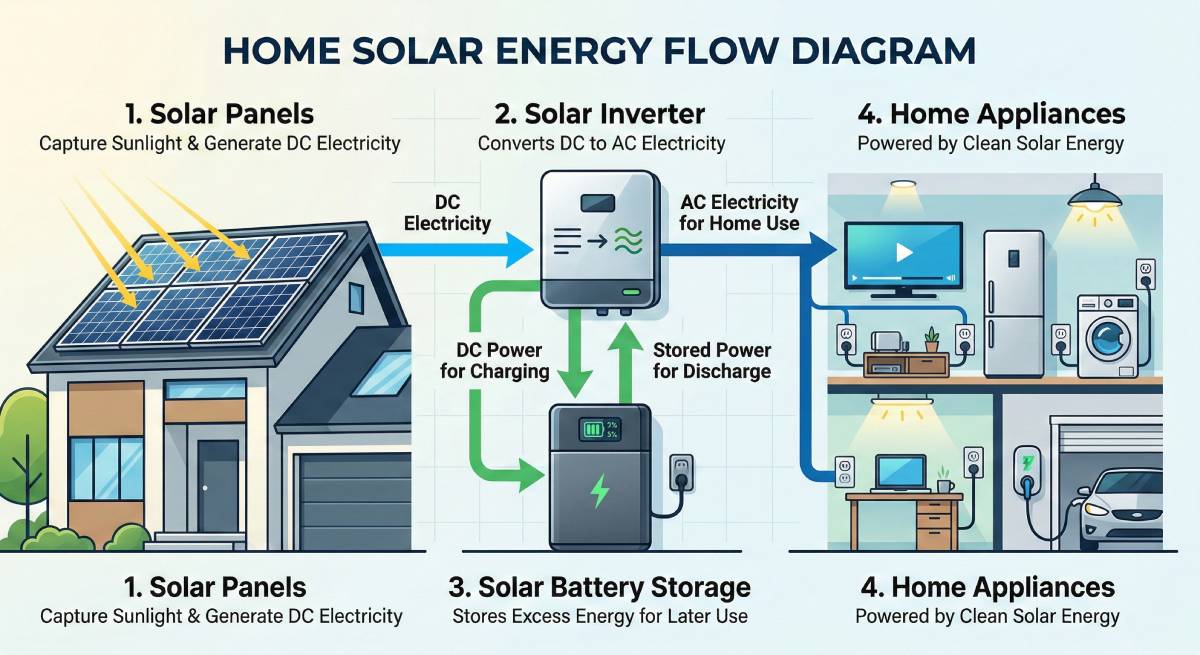
Solar panels generate direct current (DC) electricity when sunlight hits the photovoltaic (PV) cells. An inverter converts that into alternating current (AC) electricity, the type your home appliances use.
During the day, your home uses solar power first. Any surplus energy — instead of being exported to the grid — is directed into the battery, where it’s stored electrochemically.
When your panels stop producing (after sunset, on cloudy days, or during an outage), the battery discharges that stored energy back into your home. Depending on your system setup, this process is managed automatically by a battery management system (BMS), which monitors charge levels, temperature, and overall battery health in real time.
The core cycle looks like this:
- Panels generate electricity during daylight hours
- Your home uses what it needs immediately
- Surplus energy flows into the battery
- At night, the battery powers your home
- In a grid outage, the battery keeps critical loads running


Types of Solar Batteries
Not all solar batteries are built the same. Chemistry matters — it determines how long the battery lasts, how much energy it can store, and how safe it is in your home.
Lithium-Ion (Li-Ion / LFP) — The Modern Standard
Lithium-ion batteries, particularly Lithium Iron Phosphate (LFP) variants, dominate the residential solar market. Products like the Tesla Powerwall, Enphase IQ Battery, and sonnen ecoLinx all use lithium chemistry.
Why they lead the market:
- High round-trip efficiency (90–98%)
- Deep depth of discharge (80–100% DoD)
- Compact, lightweight form factor
- 10–15 year lifespan with minimal degradation
- Built-in battery management systems
Lead-Acid — The Legacy Option
Lead-acid batteries are the older technology, more commonly found in off-grid cabins or DIY solar setups. They’re cheaper upfront but cost more over time.
Key limitations:
- Lower DoD (typically 50%) — you can only use half the capacity safely
- Heavier and bulkier
- Shorter lifespan (3–7 years)
- Require regular maintenance (flooded variants)
Flow Batteries — The Emerging Contender
Flow batteries store energy in liquid electrolyte tanks rather than solid cells. They’re highly scalable and degrade minimally over time, making them attractive for commercial and utility-scale applications. Still too large and expensive for most homes, but worth watching.
Solar Battery Comparison Table
| Feature | Lithium-Ion (LFP) | Lead-Acid | Flow Battery |
| Round-Trip Efficiency | 90–98% | 70–85% | 65–80% |
| Depth of Discharge | 80–100% | 50% | 80–100% |
| Lifespan | 10–15 years | 3–7 years | 15–25 years |
| Upfront Cost | High | Low | Very High |
| Maintenance | None | Moderate | Low |
| Best For | Residential homes | Off-grid/budget | Commercial scale |
| Safety | Very High (LFP) | Moderate | High |
Key Specs You Need to Understand
Shopping for solar batteries means encountering a lot of jargon. Here’s what actually matters:
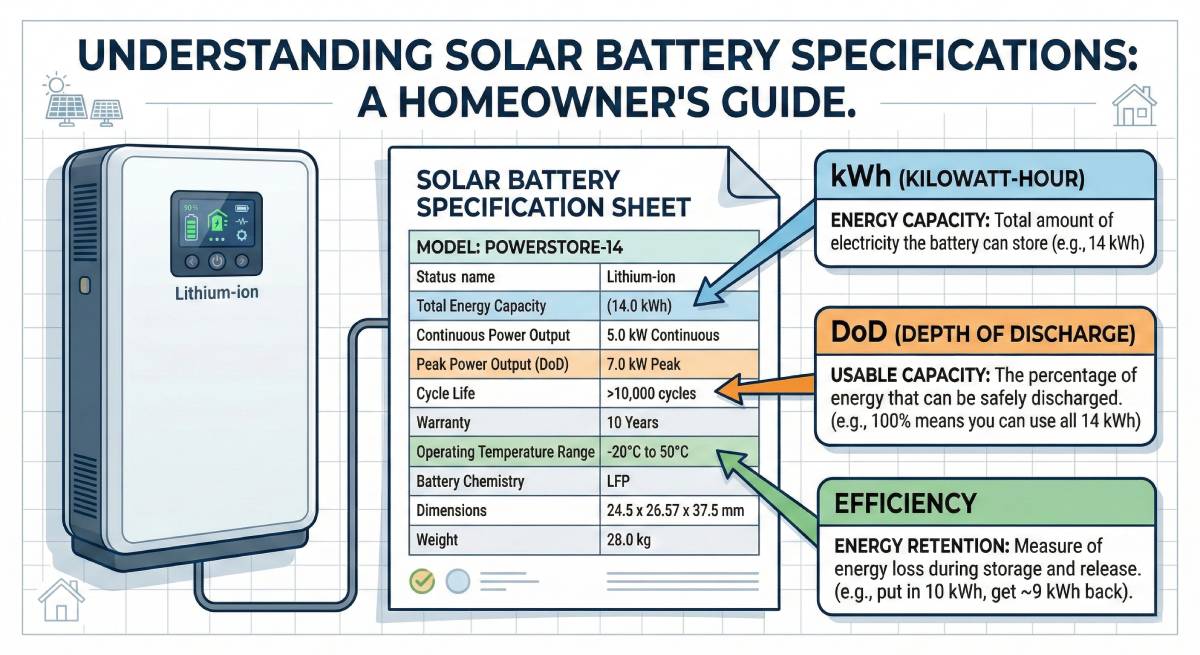
Capacity (kWh) The total amount of energy a battery can store, measured in kilowatt-hours. A typical home uses 30–35 kWh per day. A single battery (10–15 kWh) covers essentials; multiple units cover full home backup.
Power Output (kW) How much electricity the battery can deliver at one moment. A battery with high capacity but low power output can’t run high-demand appliances simultaneously — most notably, a central AC system, which can draw 3–5 kW on its own. Always check power output, not just capacity, before buying.
Depth of Discharge (DoD) The percentage of the battery’s total capacity that can be safely used. A 10 kWh battery with 90% DoD gives you 9 kWh of usable energy. Always compare usable kWh, not total kWh.
Round-Trip Efficiency Energy is lost during storage and retrieval. A 95% round-trip efficiency means that for every 100 kWh stored, you get 95 kWh back. Higher is better.
Cycle Life The number of full charge/discharge cycles a battery can handle before its capacity degrades to a specified threshold (usually 80%). More cycles = longer usable life.
Do You Actually Need a Solar Battery?
This is the question most guides refuse to answer honestly. A solar battery isn’t right for everyone. Here’s how to think through it by user profile:
A Solar Battery Makes Strong Sense If You…
- Live in an area with frequent power outages
- Are on a time-of-use (TOU) electricity tariff where peak rates are significantly higher
- Live off-grid or in a remote location
- Have already maximised self-consumption and want to reduce grid reliance further
- Your utility offers poor net metering rates (paying you far less than retail price for exported energy)
A Solar Battery May Not Be Worth It Yet If You…
- Have access to generous net metering that effectively gives you 1:1 credit for exported energy
- Have a limited solar installation (under 4kW) that rarely produces surplus
- Are primarily motivated by payback period alone — batteries extend ROI timelines
The honest bottom line: If your grid is reliable and your net metering rate is strong, solar panels alone may deliver better financial returns. A battery adds resilience and independence — and that has real value beyond pure payback calculations. If you’re unsure which setup suits your home, Solar Fit Solutions offers free consultations to help homeowners assess their storage needs based on real usage data.
How Much Do Solar Batteries Cost?
Solar battery costs vary significantly based on chemistry, capacity, and installation complexity.
Estimated Solar Battery Cost Breakdown (2025–2026)
| Battery Type | Unit Cost (Supply Only) | Installed Cost (Typical) | Usable Capacity |
| Tesla Powerwall 3 | ~$9,200 | $11,500–$14,000 | 13.5 kWh |
| Enphase IQ Battery 5P | ~$4,000 | $6,000–$9,000 | 4.96 kWh |
| sonnen ecoLinx 10 | ~$13,000 | $15,000–$19,000 | 10 kWh |
| Lead-Acid (DIY off-grid) | $1,000–$3,000 | Varies | 5–10 kWh |
Important cost offsets to consider:
- The US Federal Investment Tax Credit (ITC) covers 30% of solar battery costs when installed alongside — or charged exclusively by — solar panels
- Several states (California, New York, Massachusetts) offer additional rebates through programs like SGIP and NY-Sun
- Over a 10-year period, a battery can generate savings through peak-rate arbitrage and avoided outage costs
Solar Battery Lifespan & Maintenance
A quality lithium-ion solar battery should last 10 to 15 years under normal residential use — roughly in line with the productive lifespan of a solar panel system.
Factors that affect lifespan:
- Cycle frequency — daily cycling degrades cells faster than occasional use
- Operating temperature — extreme heat accelerates degradation; most manufacturers specify an ideal range of 32°F–95°F (0°C–35°C)
- Depth of discharge habits — consistently draining to 0% shortens life; a good BMS prevents this automatically
- Manufacturer quality — tier-1 brands include multi-year performance warranties (Tesla offers a 10-year, 70% capacity retention guarantee)
Maintenance requirements for lithium-ion batteries: essentially zero. No fluid checks, no terminal cleaning, no manual balancing. The BMS handles everything. This is one of the most underappreciated advantages over legacy lead-acid systems.
Final Thoughts
Solar batteries represent a fundamental shift in how homeowners relate to energy — from passive consumers of grid power to active managers of their own clean energy supply.
Here’s what to take away from this guide:
- A solar battery stores surplus energy from your panels for use when panels aren’t producing
- Lithium-ion (especially LFP) is the gold standard for residential use — safer, more efficient, and longer-lasting than alternatives
- Key specs to compare: usable kWh, DoD, round-trip efficiency, and cycle life
- Whether a battery makes financial sense depends heavily on your net metering policy, electricity tariff structure, and how much you value grid independence
- Costs are significant but partially offset by the 30% federal ITC and various state-level incentives
- Lithium-ion batteries require virtually zero maintenance and typically carry 10-year warranties
The technology is maturing rapidly. Prices are falling. And as grid instability becomes a more common conversation in communities across the country, the value of energy independence goes well beyond the payback spreadsheet.
Which matters more to you right now — the financial return on a solar battery, or the peace of mind of knowing your home can run independently when the grid can’t? That answer will tell you everything about whether now is your moment to act.