


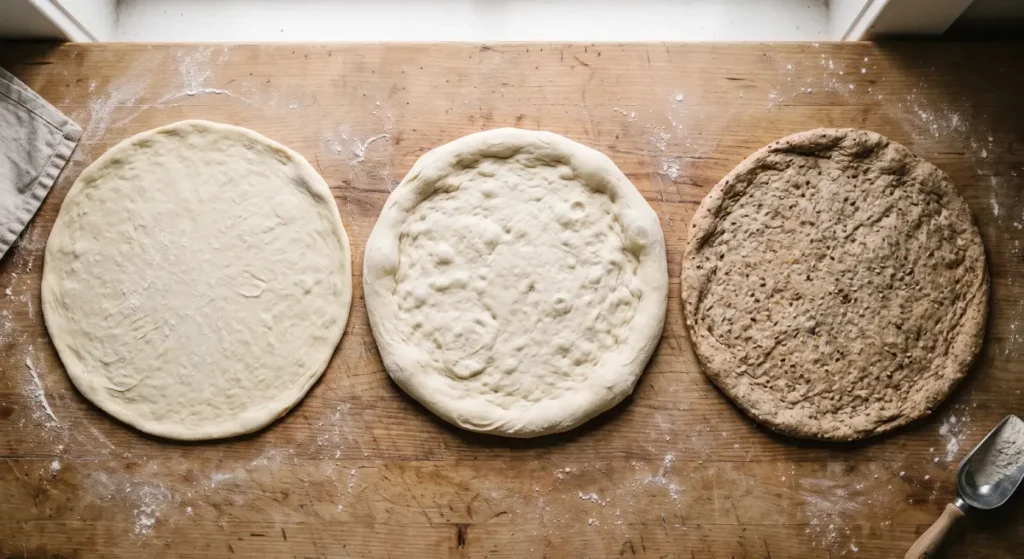
TL;DR: One slice of plain, refined-flour base will not wreck a healthy diet. The real issues are its salt load, its low fibre, and how many slices you eat. Go wholemeal or thinner, watch the sodium, keep the portion sensible, and the crust fits a balanced week.
Key takeaways
- Standard pizza crust is refined white flour: fast carbs, little fibre.
- Salt is the crust’s biggest weakness, not carbs.
- A wholemeal base adds fibre, lowers the GI, and counts as a wholegrain serve.
- Kilojoules per slice climb from thin to thick to deep dish.
- Cauliflower and gluten-free bases are not automatically healthier.
- Portion is the single biggest lever on the meal.
On this page
- What is pizza crust made of?
- What do Australia’s dietary guidelines say about pizza?
- How much salt is in a pizza base?
- Is a wholemeal base healthier than white?
- Does crust thickness change the numbers?
- Are cauliflower and gluten-free crusts healthier?
- How do you make a pizza base healthier?
- The verdict on the base
- FAQs
A few slices of takeaway pizza deliver around 1,500 mg of sodium, close to 65% of the daily upper limit for an Australian adult. Most of that salt sits in the base and the cheese, not the toppings people tend to blame.
The crust is the foundation of every pizza. It is usually flour, water, yeast, salt and a little oil, and those few ingredients drive most of the kilojoules and much of the salt in a slice.
That matters because Australia’s dietary guidelines already file takeaway pizza under discretionary foods. The base you pick can nudge a meal closer to the everyday zone or further from it.
So pizza crust is not simply healthy or unhealthy. Four levers decide it: the flour, the thickness, the sodium, and the portion.
It’s a similar story to questions like whether sleeping on the floor is actually good for you: the honest answer depends on the specifics, not a blanket rule.
What is pizza crust made of?
Standard pizza dough is refined white flour, water, yeast, salt and oil. Refined flour keeps the starchy centre of the grain and strips the outer layers during milling.
Those outer layers hold most of the fibre, vitamins, minerals and antioxidants in a grain. Eat for Health, run by Australia’s National Health and Medical Research Council, confirms these nutrients live in the outer layer that milling removes.
A plain white base therefore gives you fast-digesting carbohydrate with little fibre to slow it down. That single fact sits at the heart of the “is pizza crust healthy” question, and changing the flour fixes it.
What do Australia’s dietary guidelines say about pizza?
The guidelines group takeaway pizza with discretionary foods, the ones you eat sometimes rather than daily. The Australian Dietary Guidelines list pizza among foods to limit for saturated fat and added salt.
This does not brand the crust as poison. It places a typical commercial pizza in the same bracket as pies, pastries and burgers, foods that are fine occasionally and a problem when they crowd out core grains.
The same guidelines ask adults to eat four to six serves of grain foods a day, mostly wholegrain. A wholemeal base counts toward that target. A white base barely moves the needle.
How much salt is in a pizza base?
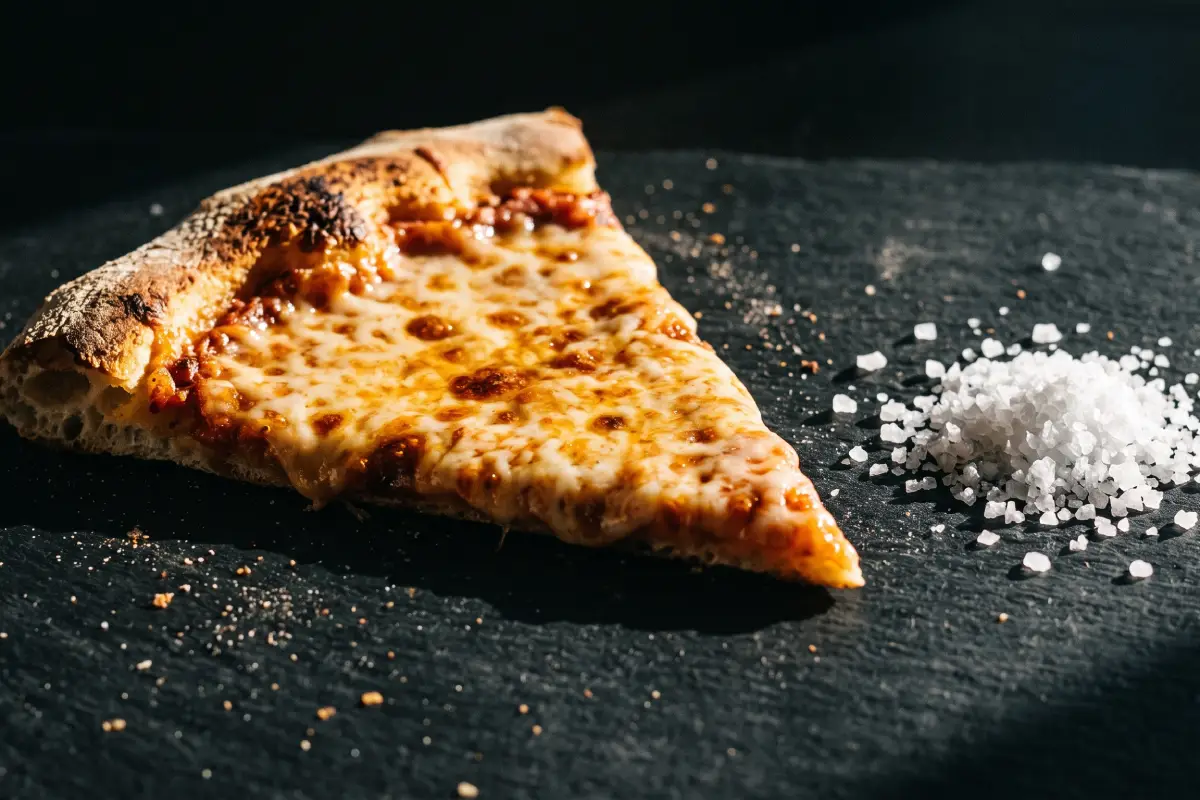
Sodium, not carbs, is the crust’s biggest weakness. Bread and pizza dough rank among the largest sources of salt in the Australian diet.
The salt maths
- 2,000 mg = Australia’s daily sodium target for adults
- 660 mg = sodium in one plain cheese slice (USDA-style figures)
- ~1,500 mg = sodium in a few slices, roughly 65% of the daily limit
The target of 2,000 mg a day comes from Dietitians Australia. At roughly 660 mg a slice, two or three slices approach or pass it before you count anything else you eat that day.
Salt in the base hides in plain sight. It does not taste as salty as chips, yet the total climbs fast once you add sauce, cheese and cured toppings like pepperoni.
Bottom line: if you change one thing about how you eat pizza, cutting the salt beats counting the carbs.

Is a wholemeal base healthier than white?
Yes. A wholemeal base beats white on fibre, nutrients and blood-sugar response. It keeps the whole grain instead of the starchy core alone.
Victoria’s Better Health Channel notes that wholemeal wholegrain products generally carry more fibre and a lower glycemic index than white versions. A lower GI means a slower, steadier rise in blood sugar after eating.
Sourdough is another lever. Its slow fermentation gives it a lower GI than a standard yeasted white base, so a wholemeal or sourdough crust digests more gently.
Watch the label: “multigrain” is not “wholemeal.” Some multigrain bases start from white flour with a few grains added, so look for wholemeal listed first.
Does crust thickness change the numbers?
Thinner usually means fewer kilojoules and carbs per slice, because there is less dough. Portion still decides the day, since thin slices are easy to overeat.
The figures below are typical ranges for a plain cheese slice and vary by brand, recipe and pizza size. Treat them as directional, not exact.
| Crust type | Calories per slice (approx.) | Carbs per slice (approx.) | Fibre | Relative sodium | Notes |
| Thin, refined | 150–250 | 17–25 g | Low | Moderate | Least dough, easiest per-slice saving |
| Regular / hand-tossed, refined | 250–285 | 29–36 g | Low | Moderate–high | The everyday default base |
| Deep dish / stuffed | 450–535 | 40–44 g | Low | High | Extra dough and cheese stack up fast |
| Wholemeal / wholegrain | Similar to regular | Similar to regular | Higher | Moderate | More fibre, lower GI, best core-grain choice |
| Cauliflower | ~150–200 | 12–15 g | Varies | Varies | Lower carb, but can be high in fat and salt |
| Gluten-free (rice/tapioca) | Varies | Often higher | Often low | Varies | Not automatically healthier than wheat |
Calorie and carb ranges are drawn from published nutrition aggregators (SnapCalorie, CalMeal, EatThisMuch) and vary widely between products.
The pattern is clear. Thin trims the per-slice maths, deep dish inflates it, and wholemeal wins on fibre while staying close to a regular base on kilojoules.
Are cauliflower and gluten-free crusts healthier?
Not by default. A gluten-free label describes what a base lacks, not how nutritious it is.
Many gluten-free bases swap wheat for rice flour and tapioca starch, which can raise the carbohydrate count and lower the protein compared with wheat. They earn the “healthier” tag only if you have coeliac disease or genuine gluten sensitivity.
Cauliflower crust does cut carbs, often to around 12 to 15 grams a slice. The trade-off is real, since many commercial versions add cheese, egg and oil to hold together, which pushes up fat and salt.
Bottom line: alternative bases solve specific problems (low-carb, gluten-free) rather than being universally better.
How do you make a pizza base healthier?
Five changes turn the base from a weak point into a neutral or positive part of the meal.
- Choose a wholemeal or high-fibre base. It counts toward your daily wholegrain serves and slows the blood-sugar spike.
- Go thinner, skip deep dish. Less dough means fewer kilojoules and carbs before a single topping.
- Cut the salt where you can. Pick a lower-sodium base, go light on cheese, and use fresh vegetables instead of cured meats.
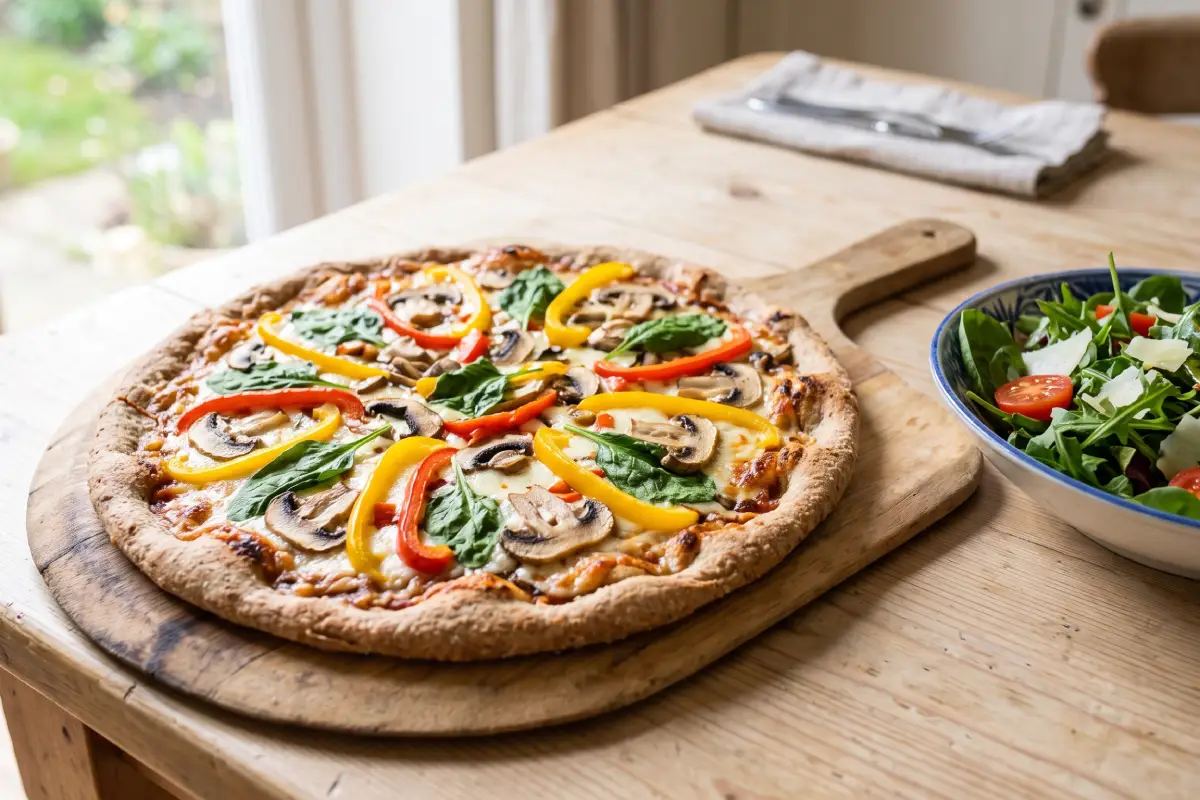
- Load the base with vegetables. Peppers, spinach, mushrooms and onion add fibre and nutrients and help fill you on fewer slices.
- Stick to two slices with a side salad. Portion is the biggest lever, and a salad makes the third slice easier to leave.
If you’re ordering rather than making your own, check the menu for a wholemeal or thin-base option before you pick toppings. Pizzerias like Riviera Pizza.com.au list crust choices upfront, which makes it easy to swap to the lighter base without changing anything else about your order.
The verdict on the base
Here is the truth the headline cannot dodge: it depends. Pizza crust is not inherently healthy or unhealthy, and any page that hands you a flat yes or no is selling something.
The base you pick decides it. A plain white base is a refined grain with little fibre and a real salt load, which is why the guidelines file takeaway pizza as discretionary. That same base, made wholemeal, kept thin, lightened on salt and eaten two slices at a time, sits comfortably in a balanced diet.
So the four levers hold the answer. Flour type, thickness, sodium and portion turn the same food from a weekly indulgence into an everyday-friendly meal, or the reverse. The crust is not your enemy. The choices around it are.
FAQs
Is thin crust healthier than thick crust?
Usually, per slice. A thin base uses less dough, so it carries fewer kilojoules and carbs than a thick or deep-dish base. Portion still matters, because thin slices are easy to overeat.
Is the crust the unhealthiest part of a pizza?
Not on its own. The base adds refined carbs and much of the salt, but cheese and cured meats add most of the saturated fat and push sodium higher. The whole slice matters more than any single part.
Is wholemeal pizza crust actually better?
Yes, on fibre and blood-sugar response. Wholemeal keeps the whole grain, so it carries more fibre and a lower glycemic index than white flour, and it counts toward your daily wholegrain serves.
Is cauliflower crust healthy?
It is lower in carbs, which suits low-carb eating, but it is not automatically healthier. Many versions add cheese, egg and oil, so check the fat and sodium before assuming it is a clean swap.
Is gluten-free pizza crust healthier?
Only if you need it. Gluten-free bases often use rice flour and starch, which can mean more carbs and less protein than wheat. Choose it for coeliac disease or gluten sensitivity, not as a default upgrade.
Can I eat pizza crust on a diet?
Yes, with limits. Pick a thin or wholemeal base, keep to two slices, add a salad, and treat pizza as an occasional meal rather than a staple.